
15 October 2026 · Events
Hangelar, the NSG and the German Rifle India Never Stopped Using
Notes from a guest shoot at GSG 9, and why Indo-German defence ties still run on people.
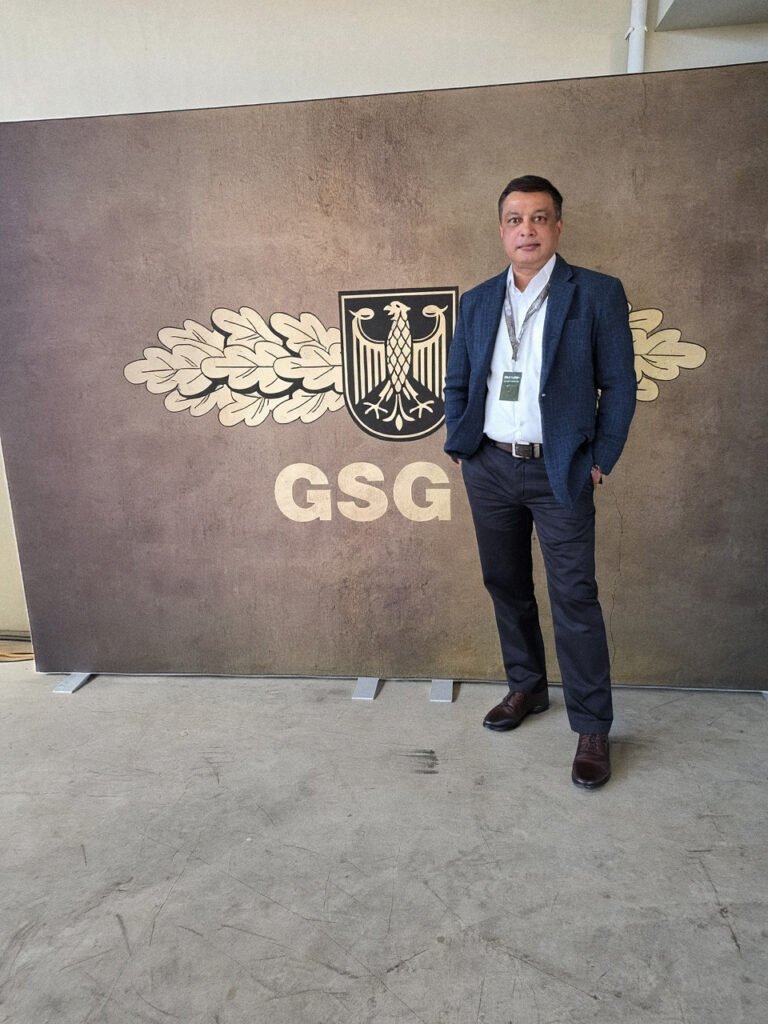
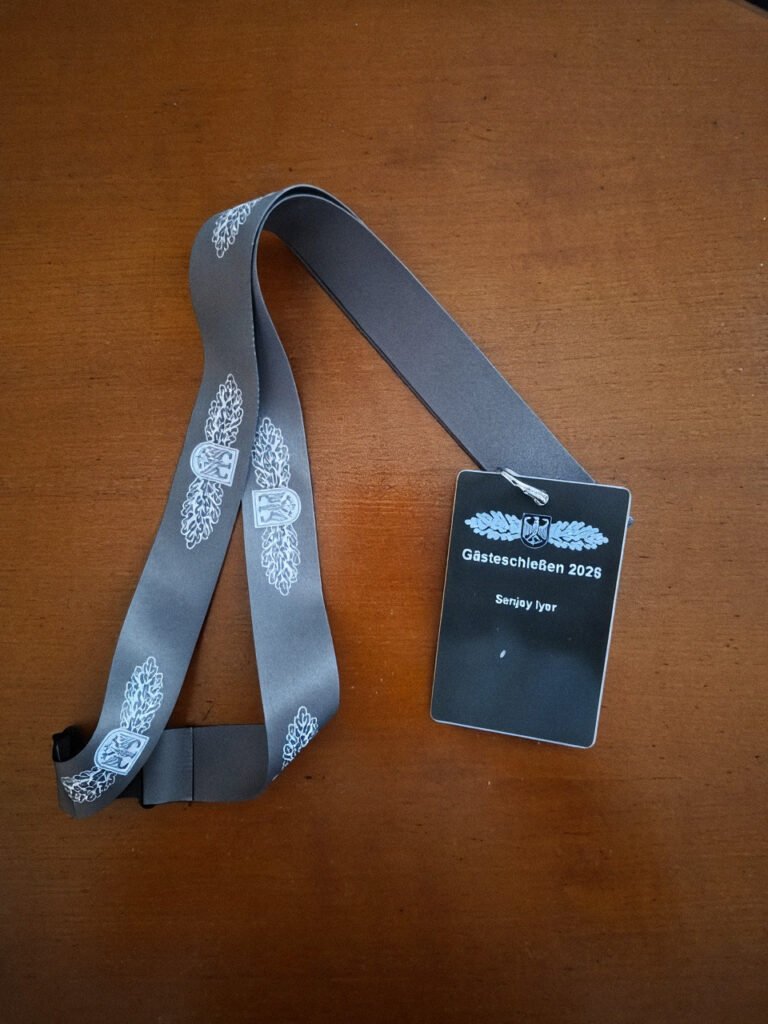
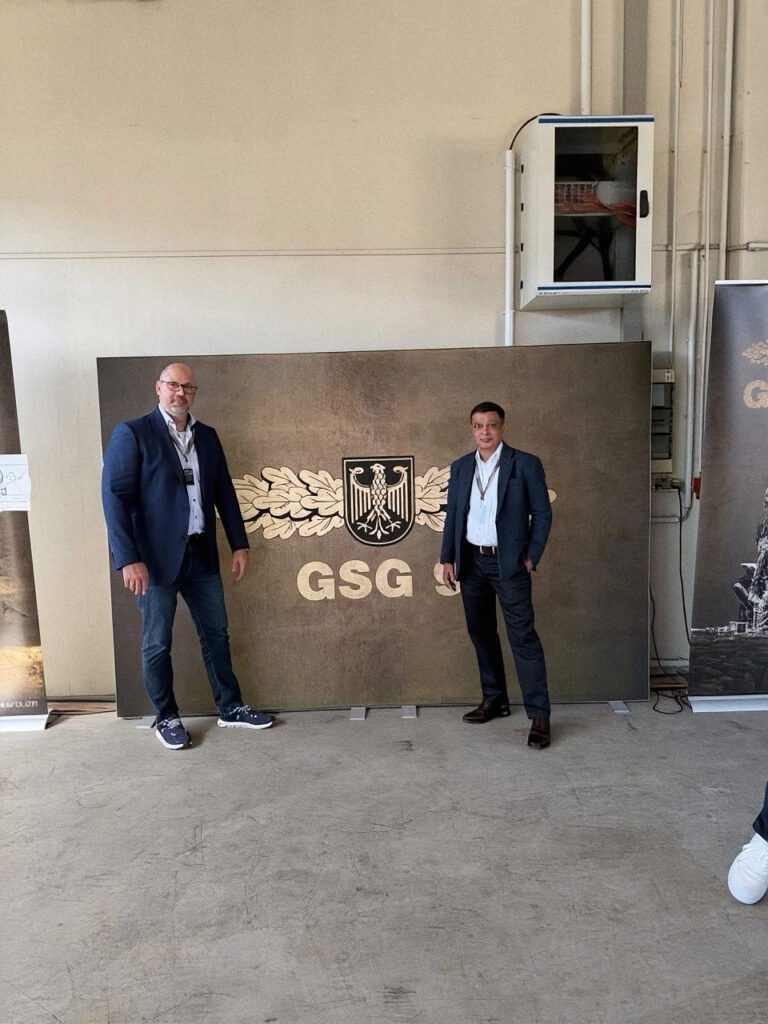
On 25 September I spent the day at the headquarters of GSG 9 der Bundespolizei in Sankt Augustin-Hangelar, near Bonn, as a guest at the Gästenschießen 2026. I had not been back in that world since my tenure as Defence Attaché to Germany, Austria and Switzerland ended, and I wasn’t sure how it would feel. A little like returning to a school you left years ago, I suppose. It felt good. It was a pleasure to be among the people who keep Germany’s security community connected, and to meet Dr.-Ing. Jens Bodo Koch, CEO of Heckler & Koch, for the first time since I finished my posting.
I’d like to use the occasion to write about two things that belong together and rarely get discussed together: where India’s National Security Guard comes from, and what is in its hands.
A unit born out of a bad month
GSG 9 was set up on 26 September 1972, weeks after the Munich Olympics massacre. Germany had a police that wasn’t built for what had just happened, and it fixed that. Five years later, in October 1977, the unit stormed the hijacked Lufthansa aircraft at Mogadishu and brought the hostages out. That operation is still the reference point for almost every hijack-rescue force in the world.
India’s turn came twelve years after Munich. The NSG was raised on 16 October 1984, in the shadow of Operation Blue Star and the assassination of Prime Minister Indira Gandhi, and was given its statutory footing by the National Security Guard Act of 1986. R.N. Kao, the former head of R&AW, is credited with creating it. Open sources agree on one point with almost no variation: the NSG was modelled on the British SAS and on GSG 9.
Now, I have heard it said, and have probably said it myself in a loose moment, that GSG 9 “set up” the NSG. I’d be careful with that. What the public record firmly supports is the model. I could not find a documented German training team in India in 1984 or 1986, and I’m not going to invent one. Maybe one existed and simply never made it into anything I can cite. But the absence of a paper trail doesn’t weaken the point. A standing, specialist federal force, created after a national shock, trained for hostage rescue and hijack, kept apart from the ordinary police and army: that idea has a German address as well as a British one.
The hands-on contact is easier to document, and it came later. After the 2008 Mumbai attacks, an NSG team led by its Director General visited GSG 9’s headquarters near Bonn in November 2009. Officials at the time described GSG 9 as one of the commando forces the NSG was modelled on, and the point of the visit was urban counter-terror work, buildings full of armed men and civilians, which is what Mumbai had been. Joint exercises followed at Manesar. The Wikipedia entry on GSG 9 goes further and says the unit helped train and upgrade the NSG; I’d put that down as broadly right, though the detail of who taught what is thin.
What the Black Cats carry
Look at the NSG’s published equipment list and the German thread is hard to miss. The Heckler & Koch MP5 submachine gun is there. So are the PSG-1 and the MSG-90 sniper rifles. Other makers appear too, Glock, SIG, FN and others, so I won’t pretend the force is a pure H&K shop. But the MP5 in particular has been the working weapon of Indian special units for decades, the NSG’s and the Navy’s marine commandos among them.
It matters more than it sounds. An elite unit builds its drills around a weapon. Entry procedures, clearing sequences, how a team moves down a corridor, all of it gets calibrated to the handling of the gun in the operator’s hands. You don’t casually swap that. And the thing nobody outside the trade thinks about is spares. A rifle is only as good as the supply behind it.
Which brings me to the part of the story that is less comfortable.
The years the relationship went quiet
Germany had a policy, some fifteen years old by the time it started to loosen, restricting small arms sales to countries outside the EU, NATO and a short list of equivalents. The reasoning, as reported, was human rights: Berlin did not want German weapons in the hands of state police in regions where it had concerns, and Jammu and Kashmir and parts of the Northeast were named in that context. The policy was applied through the Merkel years and it landed on India along with everybody else.
I’ll concede the German side of this readily. A government that has to answer to its own parliament about where its weapons end up is not being unreasonable, and Heckler & Koch had its own reasons to be careful. Reporting at the time pointed to the arrest of former company employees over exports to Mexico, and a German court had earlier stopped sales to Saudi Arabia. In November 2016 the company announced it would stop signing new contracts outside NATO and its partners, a list of affected markets that, according to the coverage, included India.
But the policy treated very different things as if they were the same. A federal counter-terror unit that had bought the MP5 before the restrictions took hold, that fights hostage-takers rather than demonstrators, is a different customer from a state police battalion. Lumping them together did little for human rights and quite a lot for the competition. The same coverage noted that Chinese, Russian and Israeli manufacturers faced no such limits and were happy to fill the gap. That’s what a decade of cautious, box-ticking policy bought: a loyal user base that couldn’t easily get parts, and a German industry politely excluded from a market that wanted it.
Let me be fair to India as well. Procurement here has its own habits, and it would be wrong to say all the drift came from one capital. But the specific problem of the MP5, a German weapon in Indian hands and unable to be supported, was made in Berlin.
What’s changed
It has been changing, slowly and in the way German decisions usually change, which is to say with a lot of quiet paperwork and not much announcement. In April 2024 Germany granted a licence allowing the NSG to buy spare parts and accessories for its MP5s. One official was quoted calling it a huge exception. Reporting around the same time said Germany had approved roughly 95 per cent of recent Indian licensing requests and simplified its export procedures for military equipment, and that Berlin saw the move as part of a wider effort to deepen defence ties with India. I’d treat the precise percentage with some caution, since it comes from unnamed officials via press reports, but the direction is not in dispute.
There has been more since. Indian media reported that during talks in New Delhi in September 2025, External Affairs Minister S. Jaishankar asked German Foreign Minister Johann Wadephul to speed up clearances for MP5 spares, and that Chancellor Friedrich Merz, in office since May 2025, had signalled willingness to review the export rules. That second point is reported rather than confirmed from anything I’ve seen first-hand, and I’d rather say so than dress it up.
Is that a revival? Partly. A single licence for spares is not a new defence partnership, and I doubt anyone in Berlin or Delhi would claim otherwise. What it does is reopen a door that had been closed for a long time. Whether anybody walks through depends on the next several decisions, not this one.
Why a shooting day matters
A guest shoot at a police tactical unit will not produce a procurement policy, and I’d be embarrassed to suggest it. Export licences are decided in offices in Berlin by officials who may never have seen an MP5 fired. Indian procurement is a world of its own, with its own committees and its own caution.
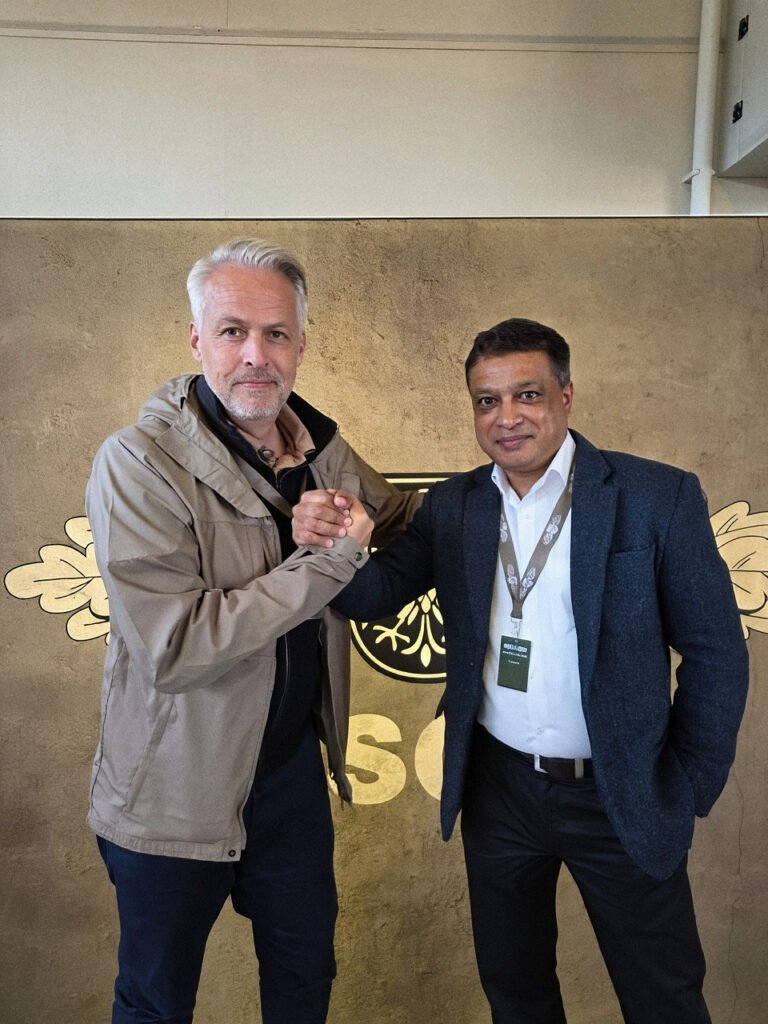
And yet. The people who write the recommendations, who brief the ministers, who decide whether a request from a partner is routine or exceptional, are shaped by who they know and who they trust. I saw that in four years as an attaché, and I saw it again at Hangelar. Relationships that lapse during a long chill don’t restart because a policy paper says they should. Someone has to turn up, shake hands, sit down at lunch, remember a name. That is true of old ties between forces like the NSG and GSG 9, and it’s true of the connection between H&K and its Indian users.
On that last point, I came away from Hangelar with a clear sense that Heckler & Koch’s interest in India is genuine and long-standing, not something dusted off when the licences got easier. You can build a lot of goodwill over decades of an MP5 in the hands of a force like the NSG. It would be a shame to spend it by never calling.
My thanks to the GSG 9 hosts for their hospitality, and to everyone who made the day what it was. The NSG marks its raising day on 16 October. The guns its operators carry were made in Germany, and the doctrine behind them has a good deal of Sankt Augustin in it. I think that is worth remembering, and worth looking after.
Sources used for facts above: Wikipedia entries on GSG 9 and the National Security Guard; Deccan Herald (November 2009) on the NSG’s visit to GSG 9; Hindustan Times (April 2024) and ISTN (April 2024) on the MP5 spares licence; The Firearm Blog (November 2016) on H&K’s export policy; idrw.org on the September 2025 talks. Press-reported details are attributed as such in the text.